Case Study Of a Stack Certified AI Consultant
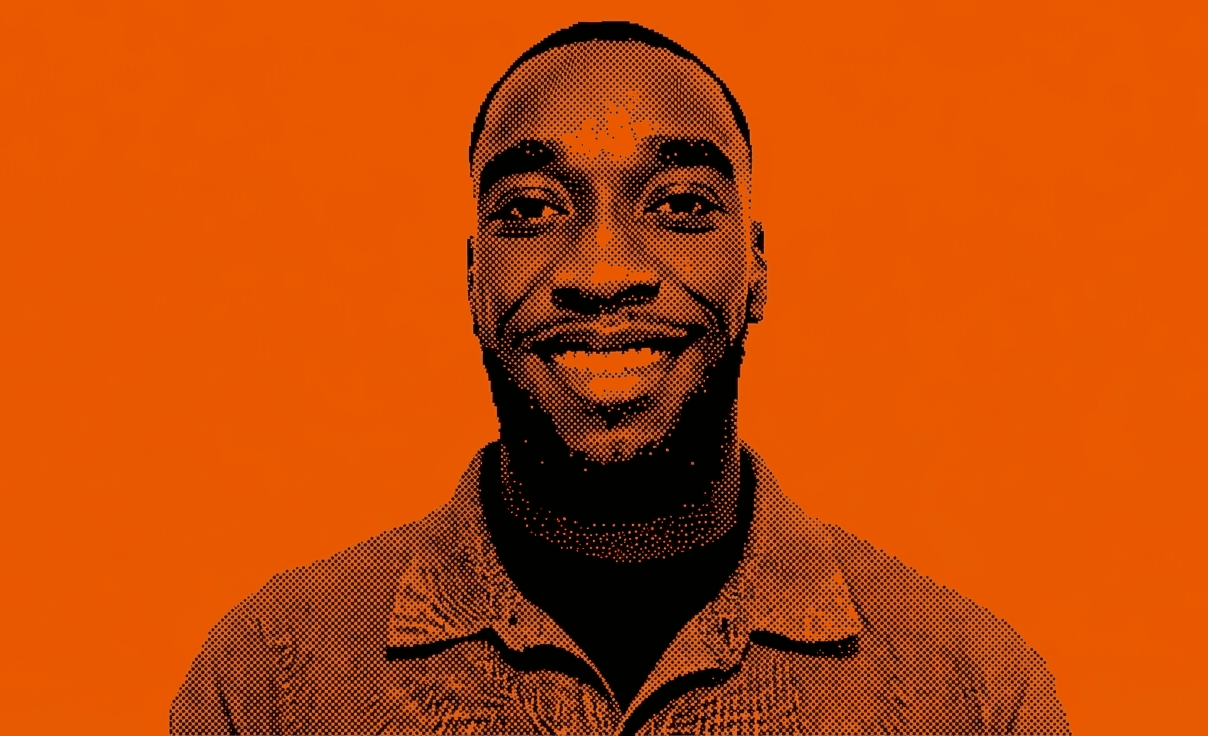
After getting laid off from JPMorgan Chase, Amadou didn't panic. He planned.
His background was strong — data scientist, product manager, years of corporate experience at one of the world's biggest financial institutions. But he wasn't looking to land another job like the one he'd just left. Mandatory five-day office attendance. Forty-five minute commutes each way. Projects stuck in approval chains for months. Limited control over his own work.
He knew AI was the future. He'd been experimenting with ChatGPT and Claude long enough to see the potential. What he didn't have yet was a clear path from "I understand these tools" to "I have a business that pays me." This gap between AI fluency and AI consulting revenue is where most people stall out indefinitely.
Two months after joining Stack, Amadou signed his first client. One month after that, he signed his second. His company, Karfa AI Group, is now targeting $50,000 in monthly recurring revenue within its first year.
Here's exactly how it happened — and what made the difference.
Why Most AI "Courses" Weren't Enough
Before committing to Stack, Amadou evaluated his options seriously. Online communities, courses, platforms, bootcamps — the market for AI education is flooded, and he wasn't going to commit without understanding what he was actually getting.
What he kept running into was a consistent gap. Plenty of platforms could teach him how to use AI tools. Almost none of them could teach him how to build a business around them. Knowing how to prompt Claude doesn't tell you how to define your niche, price your work, write a proposal, or convert a prospect into a paying client.
What drew Amadou to Stack wasn't the technical curriculum. It was the business infrastructure: niche definition, service positioning, client acquisition, proposal development, consulting frameworks. A structured progression with a clear path from Stack Certified through to Stack Pro and Stack X. And a real community of genuine professionals doing the work, and supporting each other on daily calls.
The distinction he kept coming back to: Stack offered zero-to-one business building, not just technical tricks. That's what he needed, and he was right to hold out for it.
Getting Specific: The Niche Work That Made Everything Else Easier
The first real work Amadou did inside Stack was figuring out exactly who his consulting business was for. This is the step most new consultants rush or skip entirely — "I help businesses implement AI" sounds like a niche until you try to use it to write an outreach message or close a deal.
Stack's frameworks pushed Amadou to get specific: who exactly, what problem exactly, what outcome exactly. He landed on professional services firms dealing with heavy paperwork and knowledge management challenges — a real, painful, measurable problem that his background gave him instant credibility to solve.
That clarity translated directly into his outreach. Rather than blasting his LinkedIn network with generic messages, he identified 50 to 60 people who fit his ideal client profile and reached out with intention. The results: 20 responses, 4 discovery calls, 1 signed client.
That conversion rate isn't luck. It's what happens when your message maps precisely onto the problem your prospect is already losing sleep over — and when you've done the work upfront to know who that prospect actually is.
The LinkedIn Lesson Every New Consultant Needs to Hear
Early in his Stack journey, Amadou posted on LinkedIn and went viral. Four hundred thousand views. Seven booked calls.
And almost none of them were potential clients.
The audience his post attracted was students and job seekers — people impressed by his story but not in a position to hire him. It felt like momentum. It wasn't.
This is one of the most common traps Stack founders encounter in their first few months, and the community caught it quickly. Through daily founder calls, Amadou was surrounded by people who'd already made the same mistake — who'd chased reach and ended up with full calendars and no revenue. The feedback was direct: viral content doesn't equal qualified leads. ICP-specific content does.
Amadou pivoted. He shifted his content strategy away from broad reach and toward posts that would resonate specifically with decision-makers in his target niche. Fewer impressions. More qualified conversations. The right clients started finding him.
The ability to make that pivot fast — before months were wasted optimizing for the wrong metric — came directly from having the right people around him at the right time.
The Client Work: Real Problems, Real Results
Client One: A Grant Consulting Firm
Amadou's first client was a grant consulting firm with a broken intake process. New clients were waiting two to three weeks to get onboarded — a bottleneck that created friction, delayed revenue, and frustrated everyone involved.
Armed with Stack's consulting frameworks for scoping and delivering projects, Amadou built an automated intake workflow that replaced the manual back-and-forth with a streamlined process. The result: client onboarding now takes 20 minutes instead of two to three weeks. That's a greater than 95% reduction in time — the kind of outcome that doesn't require any explanation to a business owner.
Client Two: A Real Estate Investment Firm
His second client was a real estate investment firm manually analyzing 90-plus page investment memorandums. Analysts were spending enormous amounts of time reading, summarizing, and extracting relevant information from dense documents — a classic high-effort, low-leverage task.
Amadou built an automated document analysis system that processes and extracts insights from those memorandums without requiring human review. The result: the firm eliminated the need for a planned $150,000 salary hire. Not a productivity improvement — a direct, calculable impact on their headcount budget.
What Made This Work When Other Approaches Don't
A few things stand out about how Amadou built Karfa AI Group that are worth naming clearly.
He did the niche work before the outreach work. Stack's framework forced specificity before action — which meant when Amadou picked up the phone or sent a message, he was already speaking directly to the right person's real problem. Most new consultants get this backwards.
He used community to skip the expensive mistakes. Daily founder calls meant Amadou wasn't making decisions in isolation. Pricing a project, scoping a proposal, figuring out why a call didn't convert — these are exactly the moments where solo founders stall out for weeks. Having people around him who'd already faced those situations meant he could move faster and with more confidence.
He listened to the data, not his ego. Going viral felt good. Pivoting away from that to ICP-specific content was a harder choice. Amadou made it anyway — because the community gave him a clear-eyed read on what was actually working.
He priced for value, not time. An automation that eliminates a $150,000 salary hire is worth far more than an hourly rate would suggest. Stack's pricing frameworks helped Amadou understand how to quantify outcomes and position his fees accordingly — something most new consultants take months to figure out on their own, if they ever do.
What Amadou Is Building Next
Karfa AI Group isn't a freelance side project. Amadou is building a company. He's planning his first sales and business development hire. He's developing a micro-SaaS product as a second revenue stream. He's set a target of $50,000 in monthly recurring revenue within the next 12 months.
What This Means If You're in a Similar Position
Most people who leave corporate roles with AI knowledge make one of two mistakes. They either stay too broad — "I help businesses with AI" — or they go so deep into the tools that they lose sight of what clients actually pay for, which is outcomes, not technology.
Amadou avoided both. His background gave him the domain credibility. Stack gave him the business frameworks and AI learning to turn that credibility into something clients would pay for. And his own discipline — the ICP work, the outreach, the willingness to pivot his strategy when the data told him to — did the rest.
The path he took is replicable. The work ethic is his own. But nobody has to figure out the framework from scratch.
Amadou is a Stack Certified AI Consultant and founder of Karfa AI Group. If you're ready to build your AI consulting business with the same structured foundation, apply to Stack here.