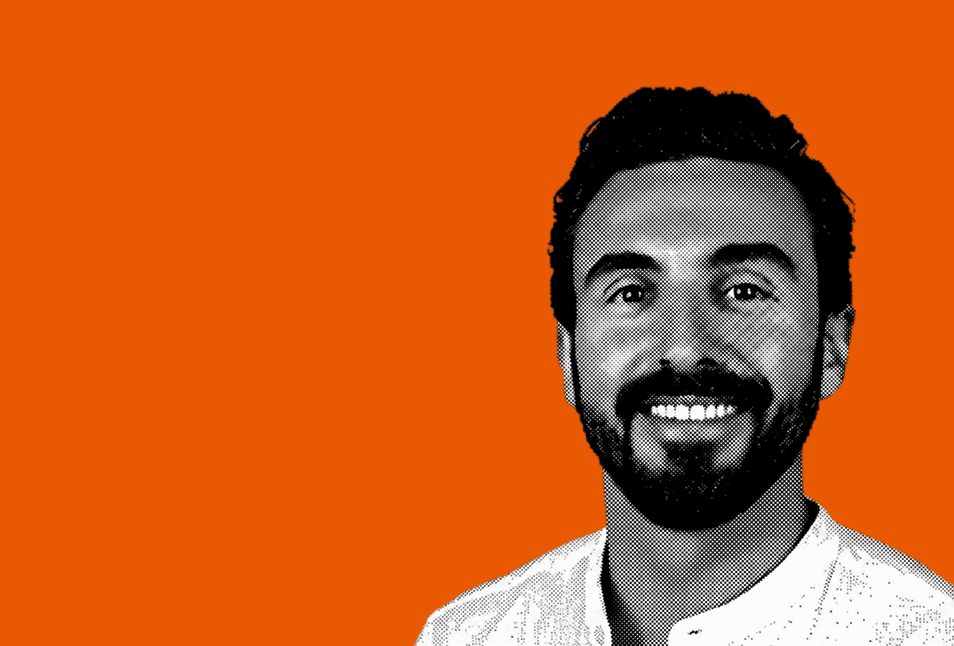

Case Study of a Stack Certified AI Consultant
Parker Davis didn't set out to build an AI consulting business. He set out to fix a spreadsheet.
His mom mentioned to a colleague that her son "did technology." That colleague ran a nonprofit delivering child sexual abuse prevention training to adults in the community — and she was doing everything by hand. Grading assessments. Sending certificates. Managing email follow-ups. Hours of administrative work every week that had nothing to do with the mission she was actually trying to serve.
Parker met with her, asked the right questions, and built her a simple automation. On their next call, she cried. The solution had saved her 12 hours a week.
She referred him to other nonprofits. Those referrals led to more. Parker brought in a second team member, then more, and the business that started as a favor to his mom's colleague grew into a full consultancy — Scottship Solutions — serving organizations across the United States, and now beyond.
Four years later, with a background spanning ERP implementation at Koch Industries, a stint at a Y Combinator AI startup, and with 4-5 clients already, Parker joined Stack. In less than a year, revenue has grown from $70K to a projected $400K and the number of active clients has grown 5x.
Here's how it happened.
The Business That Was Already Working — and What Was Still Missing
By the time Parker found Stack, he wasn't a new consultant trying to land his first client. He had a functioning business, a team, and a clear niche: nonprofits that were under-resourced, over-reliant on manual processes, and increasingly at risk of being left behind by the pace of AI adoption.
He knew how to use AI. His team used it heavily. But what he didn't have was a standardized framework for it — a way to train new team members, a consistent methodology for applying AI to client problems, and a structured process for selling it.
"All of my learning came from YouTube University. If I had somebody new come onto the team, I was sending them a YouTube link. How my brain connected with it was much different from theirs."
What drew him to Stack wasn't the promise of learning new tools. It was the structure he needed to scale what he'd already built — a proven process he could run with a team, grounded in the experience of people who'd actually done it.
What Stack Added to an Already-Growing Business
For Parker, the most valuable part of Stack wasn't the coursework, though the structured curriculum gave his team a shared foundation they hadn't had before. It was the community.
"It's a rising tide, floats all boats mentality. Everybody puts stuff out there that's actually going to help people. There's no holding back. No 'I'll give you a little bit, and if you want more, go pay me.' It’s actual knowledge transfer."
That distinction — real practitioners sharing what's working in real time, versus influencer-style gatekeeping — is what he emphasizes when talking about Stack's value to someone considering joining.
"There's the LinkedIn influencers and then there's what's actually happening boots on the ground. Stack is the boots on the ground."
The community became a live intelligence feed for his niche. Every week, new AI tools and capabilities emerge. For a consultancy serving nonprofits — organizations that were already behind before the AI boom, and have fallen further behind since — staying current isn't optional. It's the service. Stack's community gave Parker a way to do that as a team, not just as a solo operator trying to keep up.
Stack's AI co-pilot, Stacey, also played a concrete role. Parker used it to sharpen and formalize Scottship Solutions’ go-to-market direction — running that output through his company's EOS (Entrepreneurial Operating System) inspired framework to align the team on a clear North Star.
"Being able to have Stacey fine-tune it into our different verticals — now the go-to-market is really clear and easy to align the team on."
The Niche: Nonprofits in the AI Gap
Parker's focus on the nonprofit sector isn't accidental. It's the product of four years of watching an industry fall further and further behind — and understanding exactly why.
Nonprofits were already under-resourced before COVID. The pandemic widened the gap. The AI boom widened it further. At the same time, federal grant funding is contracting, forcing these organizations to do more with less. The case for AI — as a force multiplier for mission-driven work, not just a cost-cutting tool — is clearer here than almost anywhere else.
"It's about using these tools as a force for good. To continue to do things to help people within their communities."
What started with child abuse prevention nonprofits has expanded to the broader sector. Scottship Solutions now serves 25 clients across the US, from local organizations on the East Coast to clients in the Midwest, and is in the process of closing engagements in Portugal and Spain – including an international business referred as a lead via Stack’s marketplace. Parker and his team recently landed its first state-level client: a contract with the state of North Carolina — a significant step up from the local and regional organizations that formed their initial base.
The ICP has also evolved. At the start of 2025, Parker's target client was nonprofits with up to $10M in revenue. Since Stack he hasn't spoken to a single prospect below $25M. The positioning work he'd done through Stacey — getting precise about who he was serving and why — made that upmarket shift natural rather than forced.
The Numbers
The trajectory speaks for itself.
Before Stack: 4-5 clients, approximately $70K in annual revenue.
After Stack: 25 clients, $70K hit within the first quarter of the year, full-year forecast of $400K.
That's not growth from a standing start — Parker already had a business. It's the difference between a consultancy that works and a consultancy that scales. The structure Stack provided — in go-to-market clarity, team training, and community intelligence — gave him the foundation to grow with confidence rather than in spite of uncertainty.
Why This Worked
He already had the domain expertise. Parker's ERP background, his Y Combinator experience, and four years of serving nonprofits gave him a depth of understanding that no course could replicate. Stack didn't give him credibility in his niche. It gave him the framework to operationalize it.
He used Stack to solve a team problem, not just a personal one. Unlike solo consultants learning for themselves, Parker needed a shared methodology his whole team could execute. Stack's structured Playbook and community gave him something he could point new hires to — a foundation that didn't rely on his own availability to explain.
He combined Stack's tools with his own operating system. Using Stacey's output as an input into EOS rather than treating it as an endpoint showed real sophistication in how he applied what Stack offered. The result was clarity that cascaded through the business — ICP, go-to-market, team alignment — all sharpened at once.
He stayed in his niche and went deeper. Rather than expanding into new sectors as revenue grew, Parker doubled down on nonprofits — moving from local to state-level clients, from small organizations to $25M+ ones. Stack's frameworks helped him see that vertical depth was more valuable than horizontal breadth at this stage of growth.
The community replaced expensive trial-and-error. At the pace AI is moving, staying current is a competitive advantage. The ability to tap a community of practitioners every week — not influencers theorizing, but consultants executing — has meant Parker's team operates on current intelligence rather than last quarter's knowledge.
What Parker Is Building Next
The $400K forecast isn't the ceiling — it's the baseline. Parker's goals for the rest of the year centre on two things: moving upmarket within the nonprofit vertical (YMCAs, Goodwill, Habitat for Humanity), and expanding internationally as European clients come onboard.
He's also building out the client logo strategy deliberately — acquiring more known names in the sector to compound the referral flywheel that got Scottship Solutions started in the first place. The business that started because his mom told someone he "does technology" is now a recognized firm in the US nonprofit AI space, and building toward becoming the dominant one.
What This Means If You're Where Parker Was
Parker's story is different from a career-changer landing their first client. It's the story of someone who had already proven the model — and needed the structure, the community, and the methodology to take it to the next level.
If you have a functioning consulting practice and you're hitting the ceiling that comes from doing everything on instinct, on YouTube tutorials, and in isolation — that's the gap Stack was built for.
The expertise you've built over years is your moat. Stack is how you systematize it, communicate it, and scale it.
Parker didn't grow 4x by reinventing what he did. He grew 4x by finally having the infrastructure to do it properly.
Parker Davis is a Stack Certified AI Consultant and founder of Scottship Solutions, an AI and technology consultancy serving nonprofits. If you're ready to scale your consulting practice with the same structured foundation, apply to Stack here.
FAQs
Do you need to be early in your career to benefit from Stack?
No — and Parker's story is the clearest example of why. He joined Stack with an existing business, an established niche, and four years of client relationships. The value Stack added wasn't foundational knowledge he was missing. It was the structured methodology, community intelligence, and go-to-market clarity he needed to scale a team and grow revenue.
How does Stack help consulting businesses that already have clients?
Stack's value for established consultants tends to show up in four ways: standardized frameworks that can be trained into a team (not just held in one person's head), community access that keeps you current on AI developments relevant to your niche, go-to-market clarity tools like Stacey that help sharpen ICP and positioning, and once certified access to leads through Stack’s marketplace fueling your next stage of growth. Parker used all four.
Is nonprofit technology consulting a viable AI consulting niche?
Yes — and it's significantly underserved. Nonprofits were behind on technology before the AI boom and have fallen further behind since. Shrinking grant funding and federal support means they need to do more with less, which makes the ROI case for AI automation particularly strong. Parker's growth from $70K to a projected $400K in less than a year reflects genuine demand in the sector.
What is EOS and how does it relate to Stack?
EOS (Entrepreneurial Operating System) is a business management framework focused on clarity, accountability, and execution. Parker used Stacey's go-to-market output as an input into his EOS process — turning Stack's frameworks into structured business goals that the whole team could align around. The combination of Stack's AI-specific tools with EOS's operational rigor gave him unusually clear direction for a business of his size.
How quickly can an established consultancy see results from joining Stack?
Parker's trajectory — $70K in revenue for all of last year, $70K hit within Q1 of this year — shows that for consultants with existing client relationships and domain expertise, the impact can be rapid. The primary accelerant is clarity: getting precise about ICP, go-to-market, and service positioning tends to unlock growth that was already latent in the business.